


Papua New Guinea
9 Day Highlands & Sepik River Sojourn
Sepik River - Goroka Show - Asaro Mudmen
Adventure of an Exotic PNG
The Goroka Show an Iconic Highlands Festival Sepik River Sojourn on PNG's Longest River Birds of Paradise & Port Moresby Highlights
9 Days / 8 Nights Small Group Tour
Guaranteed Departure
AUD8,990 p.p
TWIN SHARE
Single Supplement AUD990 P.P.
Sunday 13th to Monday 21st September 2026
Sunday 12th to Monday 20th September 2027
Tour Package includes All Meals, Accommodation, Guides, Sightseeing, Entry Fees to all activities, Porterage, Transfers, Land & water Transport & Experienced Australian Tour Leader
*And All 4 Domestic Air Flights within Papua New Guinea
EXCLUSIONS : The price does not include international airfares, visa costs, alcoholic and soft drinks or any meals not included in the itinerary. NOTE : Flynn's Tours will advise on the most suitable arrival and departure times for your International travel and how to process your visitor visa in an efficient manner.
Flynns Tours is the only Tour operator serving PNG that includes the cost of All domestic airfares a Package.
* For the 9 Day tour a price cap of AUD1,200 included in the total package price should cover the cost of the 4 Domestic Flights. Following consultation any excess to this price cap will be billed to the client.
Papua New Guinea is a developing country with a mountainous mainland surrounded by many remote islands. The regional centres are for the most part un-connected by road. Travellers normally book with only 2 nationally owned airlines that provide the only reliable air service. Airfares are expensive and without experience they are difficult for outsiders, even travel agents to book without the risking the smooth running of our the most extensive and interesting Small Group Tours of PNG.
Flynn's Tours experienced staff remove the risk and with all tour participants booked in a group booking we can provide the lowest prices possible and manage your bookings for you and allow you to enjoy your holiday without frustration and disappointment !
Iconic Goroka Show & Asaro Mudmen - Mt. Hagen's Birds and Scenery - Soak up the Mystique of a Sepik River Sojourn with it's Spirit Houses and Crocodile Culture, Carvings, Pottery , Dance & Music - Agri-tourism - Skull Caves - Birds of Paradise - Coffee Plantations - New Guinea Island's Colonial Era Intrigue - Enjoy interaction with the Friendliest of Local Peoples and Port Moresby Highlights with a world class Museum & Art Gallery.


Day By Day Itinerary:

Day 1 - Sun 13th Sept - Arrival Day in Port Moresby -
Arrive this morning from your international departure point. Australians can depart from Sydney, Cairns or from Brisbane Airport departing at 10.40 am arriving at Jacksons Airport, Port Moresby at 1.50 pm. Upon arrival we will visit the Port Moresby Nature Park. Spread over 30 acres the park is home to over 250 native animals and birds along with hundreds of plant species, many of which are rarely seen outside of PNG. The Nature Park has won a number of international awards for its works. We will spend the evening in comfortable accommodation in Port Moresby where you will be briefed the tour that you will enjoy for the next 19 days with some of the rarest and authentic experiences a global traveller could wish for. Early arrivals can enjoy early check-in at the Hotel.
Sanctuary Hotel Resort or similar - Dinner
Day 2 – Mon 14th Sept -Port Moresby to the Middle Sepik River


![_DSC0663[1]_edited.jpg](https://static.wixstatic.com/media/d800fa_9587350e3aea41318200f648fd565131~mv2.jpg/v1/fill/w_171,h_160,al_c,q_80,usm_0.66_1.00_0.01,enc_avif,quality_auto/_DSC0663%5B1%5D_edited.jpg)

This morning We will depart for Wewak on Air Niugini, PX120 at 11.20am arriving at Wewak Airport at 1.00 pm. Wewak is the provincial capital of the East Sepik Province. The province is home to the bulk of the 1126 km long Sepik River, the largest unpolluted freshwater system in PNG and among the largest and most intact freshwater basins in the Asia Pacific. This morning we travel overland across the Prince Alexander Mountains and the Sepik River Plains to reach Pagwi our access point to the mighty Sepik River in the Middle Sepik River region.From Pagwi we travel for approximately 2 Hours in our large motorised dugout canoe to Kanganaman Village in the spiritual shadow of the largest and oldest Spirit House on the river. The villagers here will perform the Cassowary Dance and Mask dance for us. Tonight we can experience “talk talk” accompanied by customary music in the Village Spirit Haus – an authentically mystical and culturally immersing experience !
Kanganaman Village Guesthouse - B , L , D
Day 3 – Tues 15th Sept - Chambri Lakes - Kamanimbit Arts Village
Arising early morning we can throw a line in the river and surrounding tributaries with the locals and maybe catch some fish. There will also be an opportunity for some early morning birdwatchin We depart Kanganaman village and head further down river before your canoe meanders off the main River into the Chambri Lakes. We visit Aibom village which is well regarded for its clay pottery sago storage jars and large fireplace dishes known as gugumbe dishes used for cooking. Here you will observe the clay pot making process. The pots are dried in the sunshine and firing is achieved by heaping dried sago palm frongs over the pottery. After 30 to 60 minutes the pots turn orange and the process is complete, enabling the painted decorations to be added. The villagers exchange and trade this essential and functional pottery with other villages for food. Located inland from the middle Sepik River the villagers source clay from the foot of Ambom mountain behind the village. The many dozens of tribes that live along this milky chocolate riverine wilderness are experts in survival, coping with isolation in the wet season when the river runs big or conversely isolation when access to the swamps and backwater lakes is cut off from the main river during extended dry seasons. They collect sago and fruit, hunt cassowary, feral pigs and crocodiles, and create magnificent wooden buildings and carvings. The practices of the tribes vary, for some the spirit drums are only to be beaten after nightfall, or the spirits will know who drummers are. The “spirits” are the ghosts of the ancestors going all the way back to creation. As well as sacred drumming and a host of secret ceremonies, the spirits insist on the carving of a tribe’s unique totems, effectively fortifying their own particular culture.Before departing the Chambri Lakes we will visit the Walidimi Spirit House where you will be entertained by renowned dance groups representing their tribes own customs and beliefs.We will visit other villages including Kamanimbit near where the American anthropologist Margaret Mead lived and worked for a period of time. These centres of carving activity produce the most artistic masks and netted string animals denoting clan totems such as the pig. Large representations of clan birds such as the cassowary along with sizable lifelike carvings of crocodiles add to a varied and impressive array of artifacts. We will stay the night at the Kamanimbit Guest House.
Kamanimbit Village Guest House - B , L , D
Day 4 – Wed 16th Sept -Sepik River – Korogo Village - Wewak Town
This morning we travel back up the river from Kamanimbit until we reach Palembei where villagers produce a unique style of carving upon which they paint in fine detail their clan bird representations. The women of Palembei also sell their sought after bilums or string bags which are made of a heavier string and open weave which expands to contain the largest of personal items, including a pikinini (baby). Appreciate two of the most decorated Spirit Houses on the Sepik River. From Palembei we travel to Korogo Village whose internationally renowned artists produce carvings of exquisite beauty. From Korogo we travel further up the river to the Pagwi where you leave your dugout canoe for the last time and we return by private vehicle to Wewak stopping at the roadside markets along the way as we traverse the Sepik River Plains and Prince Alexander Mountains until again reach Wewak Town and time permitting cruise around Wewak taking in it’s highlights. We stay the night enjoying a hearty meal at the best accommodation in the East Sepik region, the In Wewak Boutique Hotel.


Inn Wewak Boutique Hotel - B , L , D
Day 5 – Thurs 17th Sept - Wewak–Port Moresby
This morning following an early breakfast we transit to the Wewak Airport to depart on the Air Niugini PX141 flight departing at 7.40 am flight arriving at Jacksons Airport, Port Moresby at 9.00 am.
One of the activities while in Port Moresby would be visiting the Papua New Guinea National Museum and Art Gallery which is the “spiritual house” for the rich natural, cultural and contemporary heritage of the country. The museum draws on well over 30,000 anthropological collections, more than 25,000 archaeological collections, more than 18,000 natural science collections, more than 20,000 war relics and more than 7000 contemporary art collections for its displays. We take a brief viewing of the National Parliament of Papua New Guinea, a building that blends old and new and which combines modern architecture with ancient design.
Sanctuary Hotel Resort or similar - B , L , D
Day 6 – Fri 18th Sept. - Goroka - Iconic Asaro Mudmen
This morning we transit to Jacksons Airport, Port Moresby for an 9.15 am flight to Goroka arriving at 10.05 am to transit to our accommodation for check-in.
We visit the McCarthy Museum. The museum houses collections of artefacts and specimens from the Highlands region including wooden dishes, stone mortars, stone blades, magic stones and sandstones for making stone blades. There are also some WWII relics on display including a P-39 Airacobra.
We attend the agricultural show component of the Goroka Show that highlights the farming activities of the Highlanders. Displays include unique floral species produced by the vibrant local floriculture industry. The regions crops include broccoli, kau kau or sweet potato, carrots, ginger and peanuts are examples of produce that grow well here; nearby Bena Bena is known for its pineapples.
We visit the Komunive Village, a traditional highlands village of the iconic Asaro Mudmen. Legend has is that once, when the local tribe had been attacked, those not killed or captured fled into the Asaro River to hide from their attackers. Here they became covered in the white river mud. When dusk fell they decided to return to their village, still caked in mud – though not deliberately so. When the enemy tribe, still in village, saw the men now caked in mud they fled, believing them to be spirits or the avenging ghosts of the villagers they had earlier killed.
Pacific Gardens Hotel or Emmanuel Lodge - B , L , D
Day 7 – Sat 19th Sept. - Goroka Show Spectacular
Today we attend the iconic Goroka Cultural Show including the pre-show costuming preparations. Papua New Guinea’s premier cultural event, the Goroka Show, is the longest running annual cultural festival in Papua New Guinea and is held during the nation's Independence Day celebrations. More than 100 tribes participate in the event performing extraordinary displays of 'sing-sings' - traditional songs, dances and ritual performances. The staging of the Goroka Show began in 1957 and was first introduced and organised by Australian patrol officers known locally as 'kiaps'. Kiaps from each district built round houses typical of their districts where they displayed the various and unique cultures of the people living there. The kiaps brought in 'sing-sing' groups from surrounding areas. It created an entertaining weekend for everyone, and still does 60 years later. The “Sing Sing” enables a limited number of Western tourists to experience up close, the colour, movement and music performed by the largest gathering of diverse tribes in the South Pacific. Your camera clicking finger will earn a rest, having recorded some of the most memorable days of your global travels.
Pacific Gardens Hotel or Emmanuel Lodge - B , L , D
Day 8 – Sun 20th Sept. - Goroka Show 2nd Day
We attend day two of the iconic Goroka Show and your guide will explain the customs of the great variety of tribal groups and where they source the many materials that are woven into their colourful and visually striking costumes and also the substances that they decorate their bodies with. We will pop back into the agricultural displays to see anything we couldn’t see on Friday and check out who the prize winners are.
We visit a coffee plantation to view a coffee processing mill and enjoy fruit wine tasting. You will be taken through the growing as well as the factory process from factory door to preparing the green bean ready for export. This enterprise is assisting in improving Papua New Guinea’s declining coffee production, including supplying seedlings by the thousands, as well as increasing the quality of its product. Coffee is Papua New Guinea's second largest agricultural export, employing tens of thousands of people. We will view a tea plantation and visit a local village where we observe horticultural activities and also eat sumptuously tasty foods prepared by traditional methods in a beautiful panoramic setting.
We fly out of Goroka on an afternoon flight to Port Moresby.
Sanctuary Hotel Resort or similar - B , L , D
Day 9 – Monday 21st September 2026 - Fly Home

Did you know?

The promotion of community tourism on the Sepik River is an absolute imperative because if people can see the economic value in conserving the diverse culture and biodiversity of this region, it is less likely to be destroyed.
Canoe transport has served the Sepik population for thousands of years. The canoes have a very low centre of gravity, making them virtually impossible to capsize or sink. The canoes range in length from 6-10 metres and are powered by 30 hp and 40 hp outboard motors. Travelling on the Sepik River in a motorised canoe is very safe and provides an ideal vantage point from which to observe the river’s aquatic inhabitants, birdlife and Sepik River peoples whose daily life seems unchanged by modernity.
The Sepik River is the longest river on the island of New Guinea, and after the Fly and the Mamberamo the third largest by volume. The majority of the river flows through the Papua New Guinea (PNG) provinces of Sandaun (formerly West Sepik) and East Sepik, with a small section flowing through the Indonesian province of Papua.
The Sepik has a large catchment area, and landforms that include swamplands, tropical rainforests and mountains. Biologically, the river system is often said to be possibly the largest uncontaminated freshwater wetland system in the Asia-Pacific region. But, in fact, numerous fish and plant species have been introduced into the Sepik since the mid-20th century.
From the headwaters to the mouth, the river flows through at least 12 different Sepik languages, each corresponding to one or more culture regions of related villages that exhibit similar social characteristics. The largest language and culture group along the river is the Iatmul people.
The hunting of crocodiles is conducted sustainably employing a number of methods. Firstly: during the day the crocodiles are chilling in the sun, in the evening they go hunting as do the croc hunters. During the dry season they canoe along the river banks by the use of a torch until the light hits the eyes of a croc. The canoe is steered gently towards the prey, the hunter sticks to the crocodile armed with a hooked spear while the backman steers the canoe. This method has proven to be most efficient. Secondly: a group of hunters march through the swamp close to each other and working nearby to where the crocodile mother laid the eggs. Then they indiscriminately poke the swamp until they hit something and then capture it. Thirdly: set a bait overnight on a fishing hook from the shore until a croc gets caught on it.
The densely populated Highlands region of mainland Papua New Guinea was “discovered” as recently as the 1930’s by Australian gold prospectors, Mick Leahy and Michael Dwyer. Melanesians have occupied the highland interior of New Guinea Island probably for more than 30,000 years, developing advanced plant cultivation and irrigation technologies at 1,500 metres above sea level, possibly 10,000 years ago, establishing themselves amongst the world’s earliest agriculturists. The oldest evidence for this is in the Kuk Swamp area, where planting, digging and staking of plants, and possibly drainage have been used to cultivate taro, banana, sago and yam.


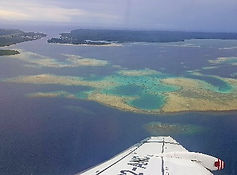


Today you can connect with international flights to fly home via direct Air Niugini flights to Brisbane, Cairns, Sydney, Singapore & Manila. A range of carriers provide flights to other international destinations. Be assured that the standard cost Port Moresby to Brisbane is historically under AUD400 for either Air Niugini and Qantas one way. Flying to Cairns is usually cheaper. A range of carriers provide flights to other international destinations.
TIME PERMITTING : Depending when your flight departs you can visit the Papua New Guinea National Museum and Art Gallery which is the “spiritual house” for the rich natural, cultural and contemporary heritage of the country. The museum draws on well over 30,000 anthropological collections, more than 25,000 archaeological collections, more than 18,000 natural science collections, more than 20,000 war relics and more than 7000 contemporary art collections for its displays. We take a brief viewing of the National Parliament of Papua New Guinea, a building that blends old and new and which combines modern architecture with ancient design.